The OpenRadar Blog
What we have learned measuring speed and driver behavior on private roads, written for the people who run a gated community and for the people who design the monitoring. Every number here comes with its source beside it; where there is no source, the text says so.
Start here
Community
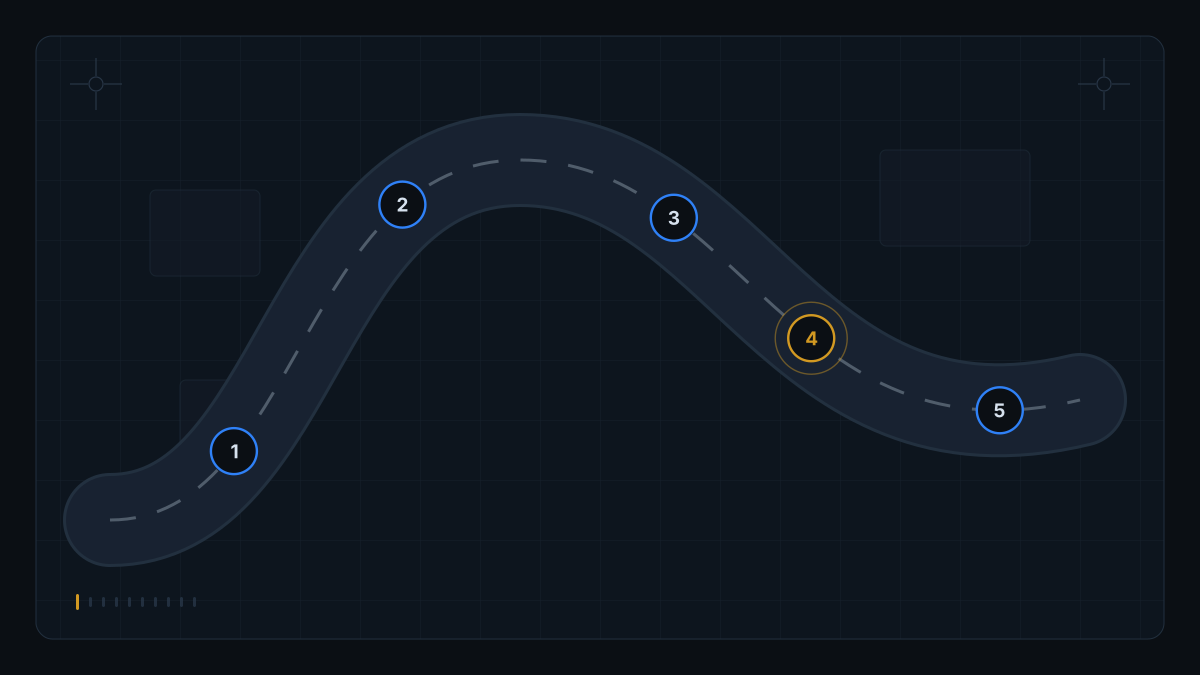
How to slow cars down inside a gated community
Five possible routes — geometry, signage, warnings, measurement and culture — and which of them only push the problem to the next corner.
6 min read
For the people who run a gated community
Speed on the internal road, what the community rules actually reach, and how to record a case that holds up at the residents’ meeting. These posts describe Brazilian law and Brazilian practice.
-

Community
Can a gated community fine a resident for speeding?
What a traffic penalty under Brazil’s CTB reaches on an internal road, what depends on the bylaws and house rules, and why due process decides the outcome.
6 min read
-
Community
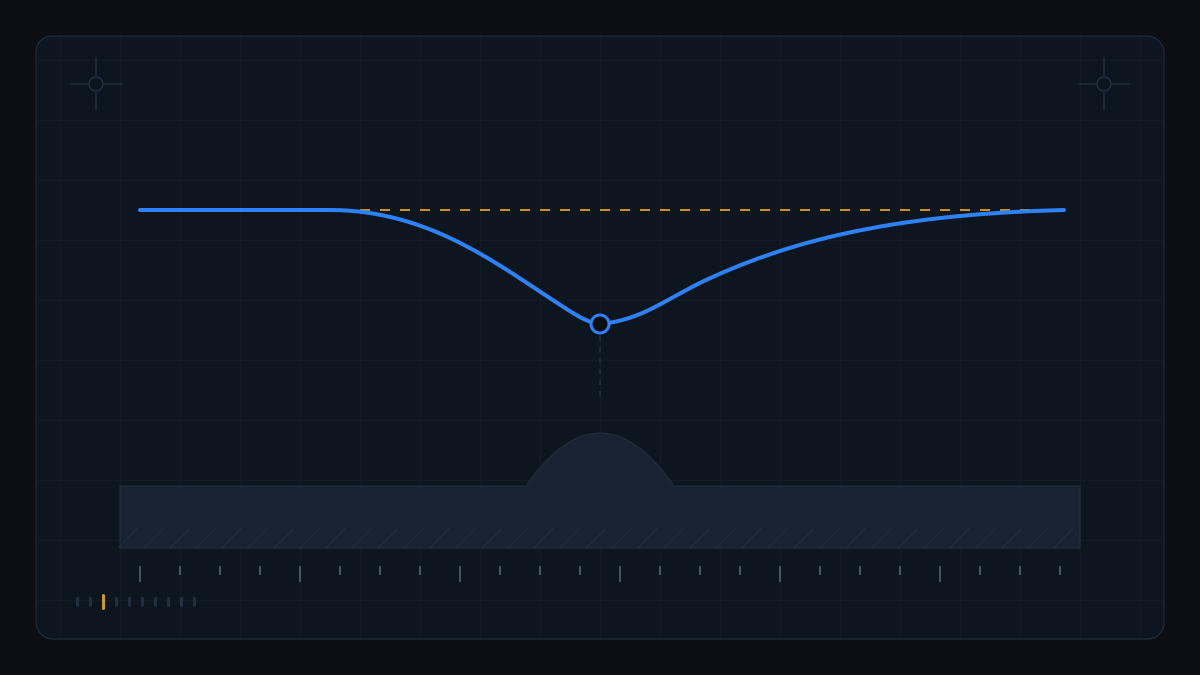
Speed bumps did not work: why drivers speed up again
A speed bump acts at one point on the road, not along the route. The local effect is real, the average effect is much smaller — and that gap is what residents read as “nothing changed”.
5 min read
-

Community
Recording an internal violation that holds up to challenge
What has to be inside a record for it to survive a challenge: the moment, the place, the identification of the vehicle, the method and the integrity of the file.
5 min read
-
Community
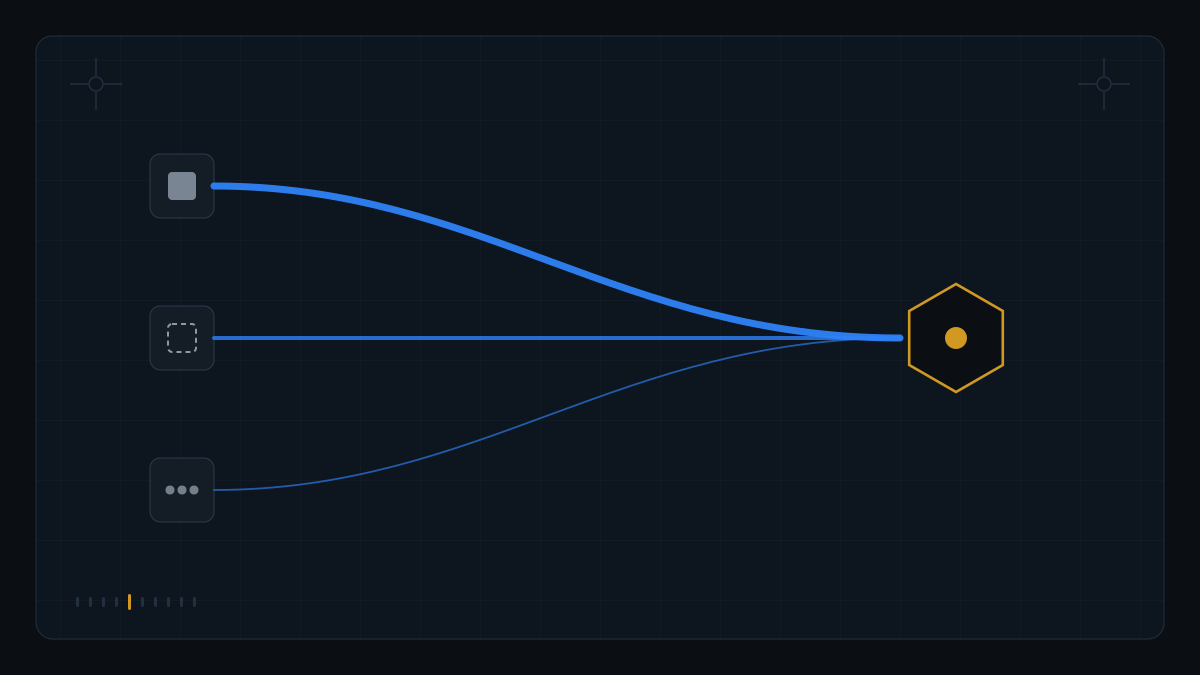
Speed radar: buy, rent or use the cameras you already have
An honest comparison of the three routes, with the limits of each. No prices and no promised results: only what changes in construction, maintenance and the evidence produced.
6 min read
Monitoring engineering and Vision AI
Standards, geometry and the physics of what a camera can — and cannot — hand to a system that decides on its own.
-
Engineering
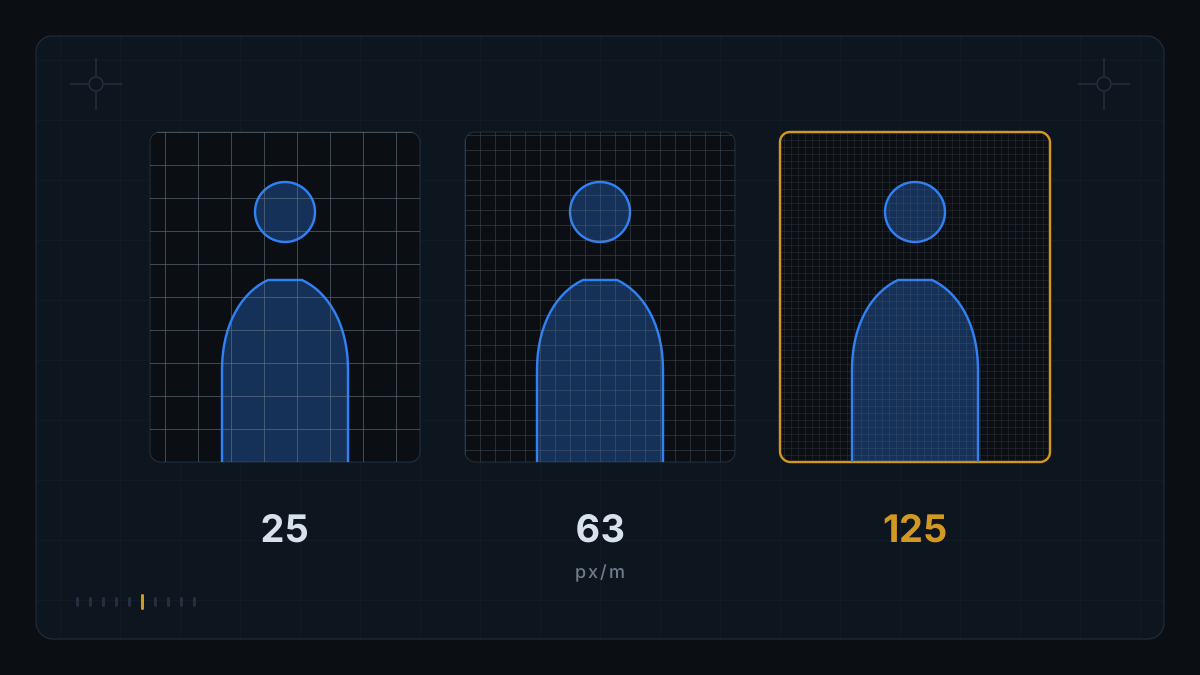
Pixel density: the sum that decides what a camera can see
Detect, observe, recognize and identify each carry a numeric pixels-per-meter requirement in IEC 62676-4:2014. The sum is one division, and it decides whether the camera will do.
6 min read
-

Engineering
The real causes of false positives in AI video surveillance
Moving shadow, headlights and reflections, rain and fog, vegetation in the wind, insects in the infrared and secondary-stream compression: why each one fools the model.
6 min read
-
Engineering
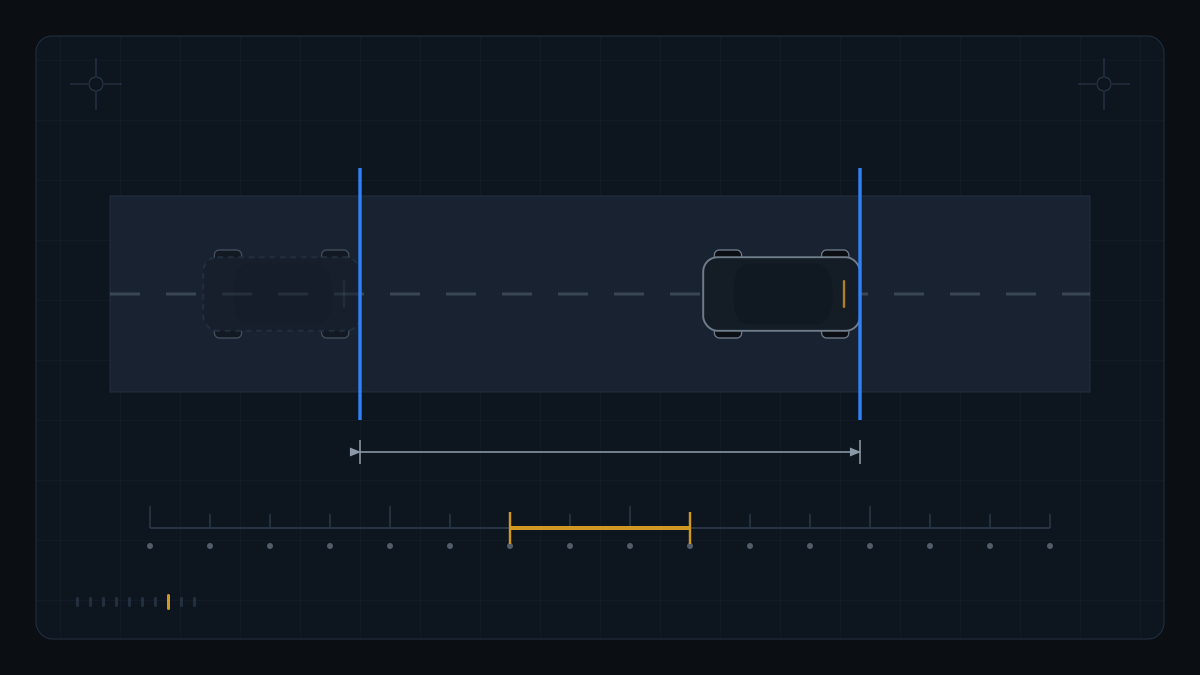
Measuring speed from video: what physics demands
Two instants and a distance. Where the error enters: frame quantization, perspective, calibration — and why the result is an average over the gap, not instantaneous speed.
6 min read
-
Engineering
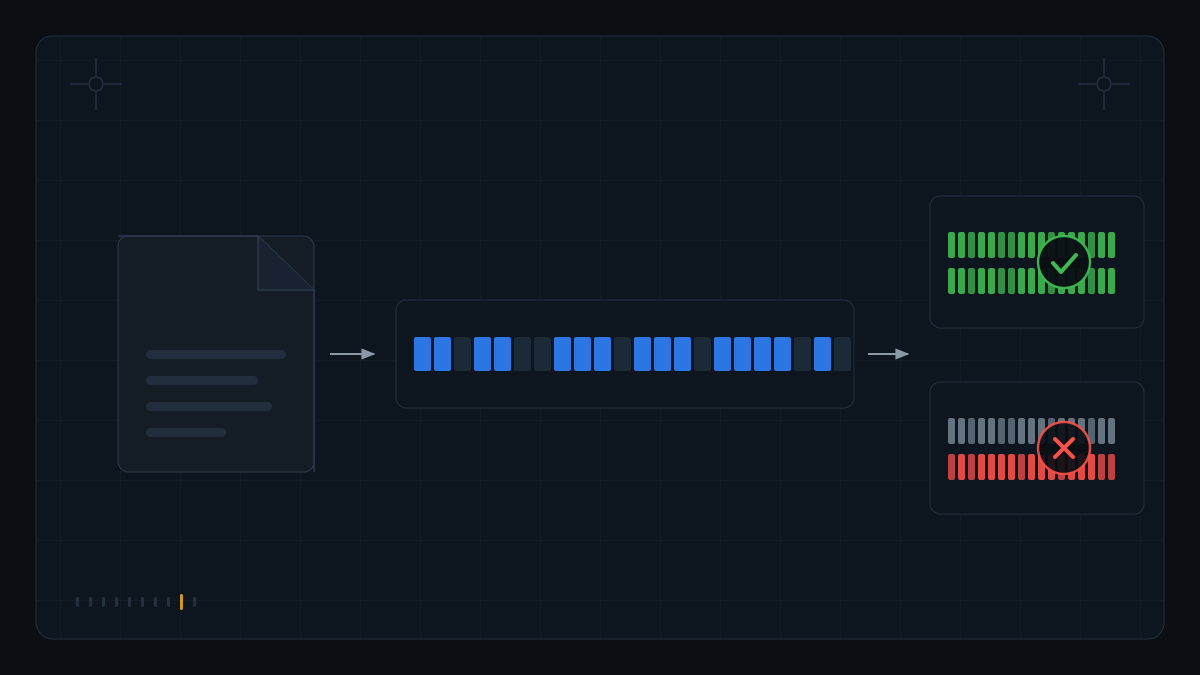
Video evidence that holds: integrity, timestamp, audit
What a hash proves, what it does not prove, and why verification has to be something a person who does not trust you can carry out alone.
6 min read
-

Engineering
Brazil’s LGPD and AI video: when the camera decides
Controller and processor, legitimate interest as a legal basis, retention, impact assessment — and the concrete legal risk of facial recognition in Brazil.
6 min read
This blog is written in Brazil and describes Brazilian law — the Brazilian Traffic Code (CTB), the Civil Code and the general data protection act (LGPD) — and the way Brazilian gated communities are run. It is not legal advice and it does not describe the rules in force where you live. Check your own jurisdiction before acting on any of it. The physics and the engineering standards, on the other hand, are the same everywhere.
OpenRadar measures vehicle speed on private roads using the IP cameras that are already installed, and records every event with a SHA-256 signature anyone can check on their own. It is not a radar certified by Inmetro/Contran and it does not issue traffic tickets: it produces a documentary record for what the community’s bylaws and house rules already provide for.
RSS feed for this blog · llms.txt — a factual summary of OpenRadar for language models.